Trip Highlights
- Exploring Cusco’s Koricancha, Plaza de Armas & Cathedral
- Rafting the Urubamba River
- Visiting Max’s family home in Ollantaytambo
- Biking through Inca terraces & villages
- Scenic horseback ride in the Sacred Valley
- Multi-course hacienda lunch with mountain views
- Scenic train ride on the Vistadome to Machu Picchu
- First breathtaking view of Machu Picchu in the mist
- Climbing Huayna Picchu (“Stairs of Death”)
- Staying beside the ruins at the Sanctuary Lodge
- Sunset strolls on Lima’s Malecón cliffs
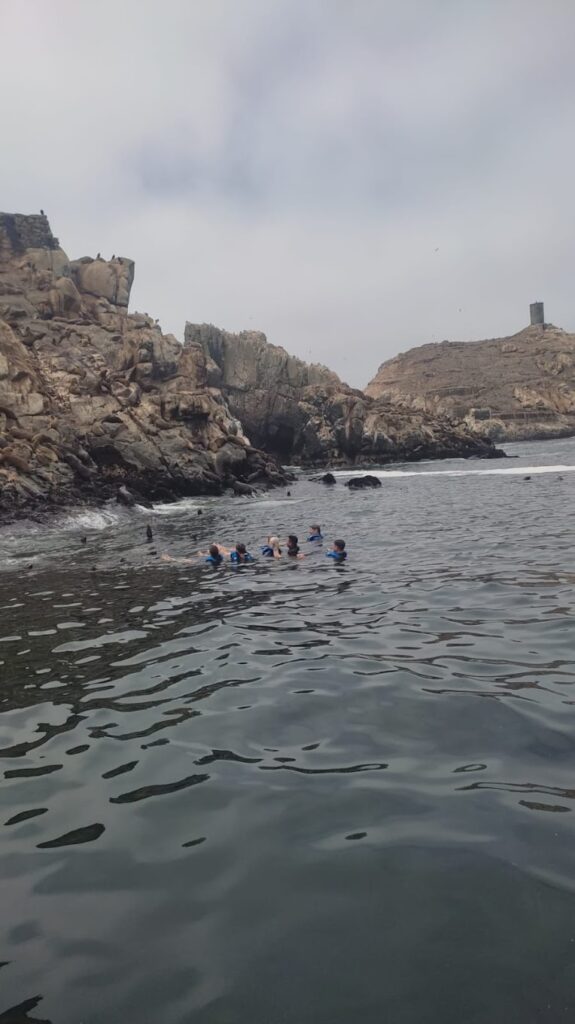
- Swimming with sea lions at the Palomino Islands
- Touring Lima’s historic center & Casa Aliaga
- Exploring treasures at the Larco Herrera Museum
Map of our Trip:
Peru Travel Journal
Day 1: Travel Day – Lima
We touched down in Lima at 2:30 am, bleary-eyed but brimming with anticipation. Luckily, our hotel — the Costa del Sol Wyndham Lima Airport — was just steps away from the terminal. It was the perfect landing spot: quick, convenient, and exactly what we needed before our early morning flight to Cusco. With bags dropped and lights out, we surrendered to sleep, eager for the adventure ahead.
Day 2: Arrival in the Sacred Valley
Flying into Cusco felt like entering another world. Terracotta rooftops, patchwork fields, and endless mountain ridges filled every windowpane. At the airport, our guide welcomed us and led us on a scenic drive into the Sacred Valley, with memorable stops along the way.
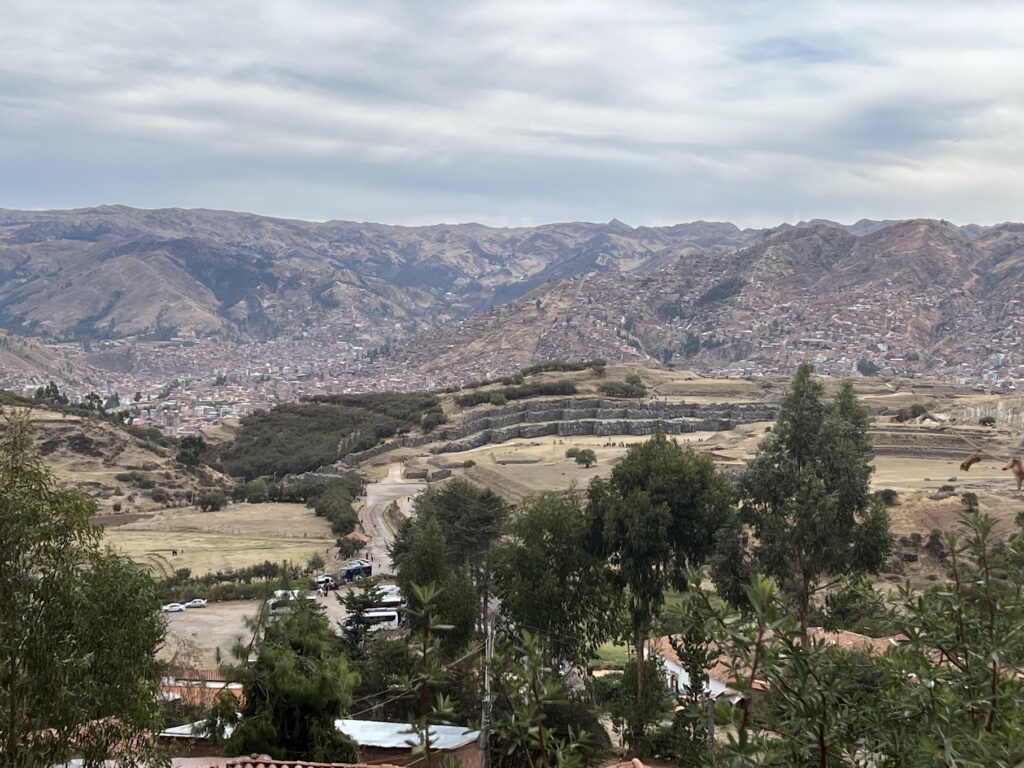
Our first was Sacsayhuaman, perched high above the city. The sheer scale of the stonework left me in awe — massive blocks fitted together so precisely, without mortar, that not even a blade of grass could slip between them. I tried to imagine the countless hands that once shaped and lifted each stone into place.
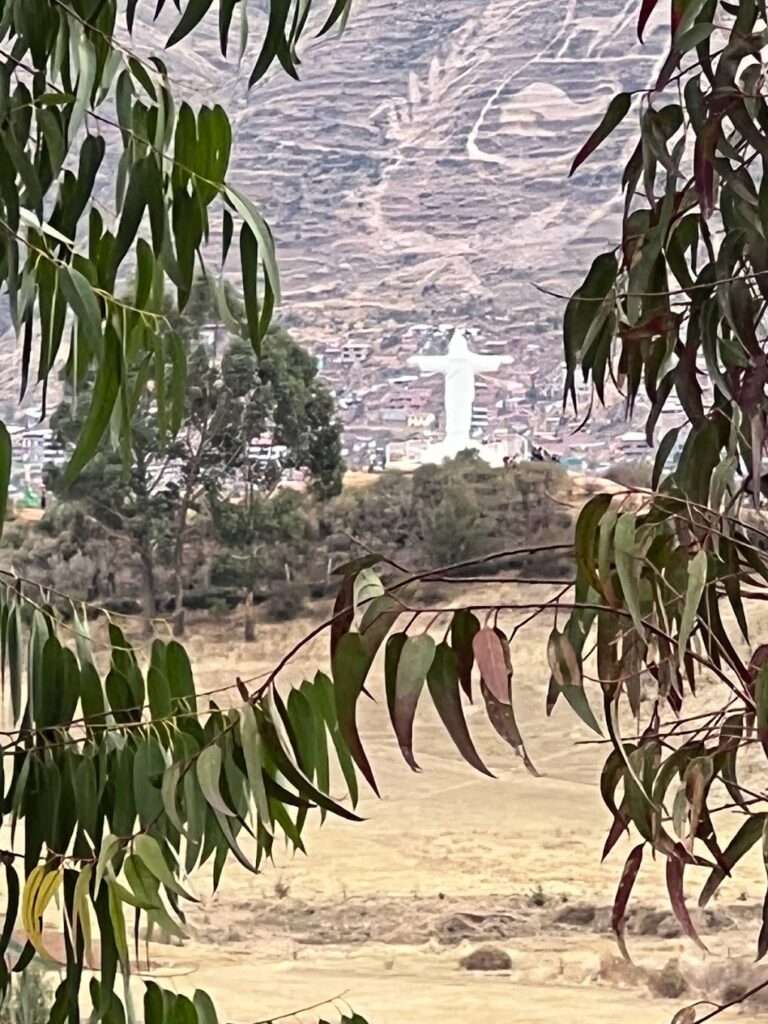
From there, it was impossible to miss Cristo Blanco, the 26-foot white statue of Christ that watches over Cusco from the hill of Pukamoqo. By day, it rises above the persimmon rooftops; by night, it glows like a beacon — the city’s North Star. More than just a landmark, it reflects the weight of Catholic influence in Peru, standing in symbolic contrast to the ancient Inca capital below.
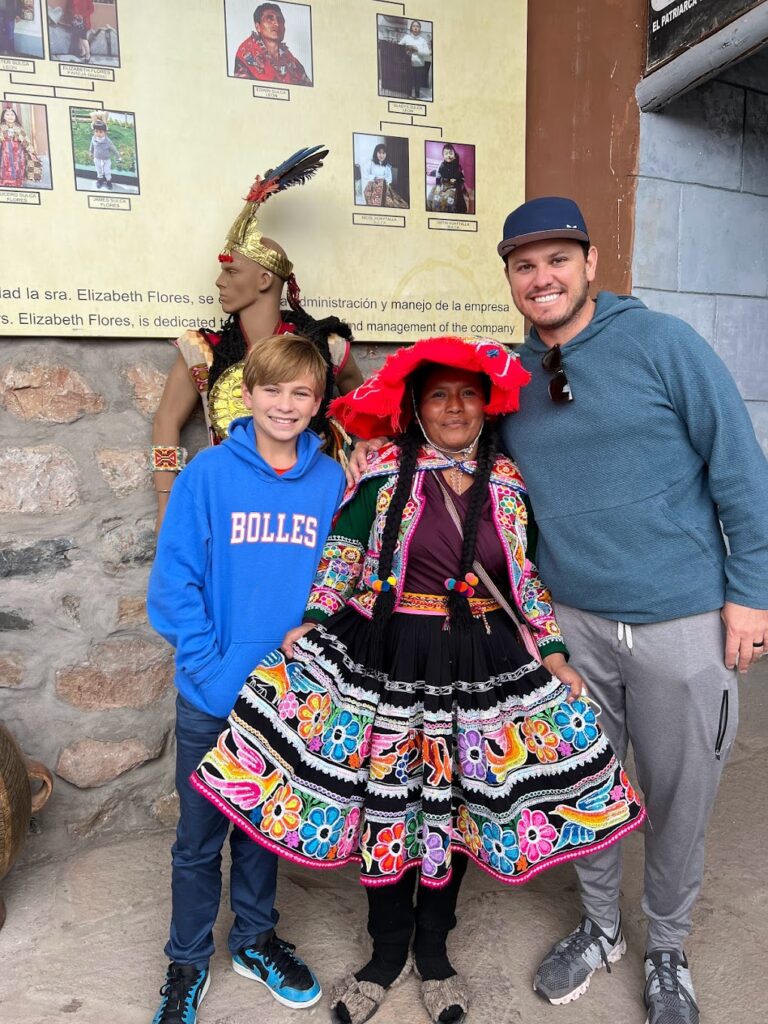
We continued to a Textile Museum, where artisans kept alive the ancient Andean weaving traditions. Watching them work was mesmerizing. Each color carried meaning, each pattern told a story — proof that culture isn’t only found in monuments, but also in the artistry passed carefully through generations.
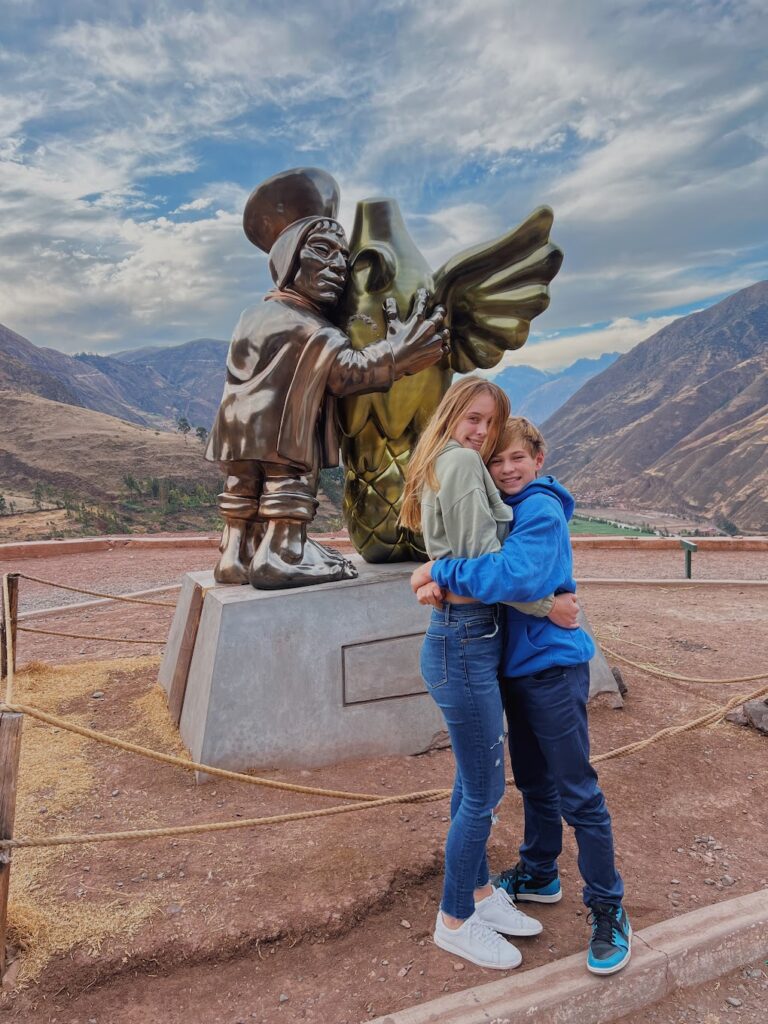
Before reaching the valley, we paused at The Impossible Hug, a striking statue born of the pandemic. It captured the longing for connection in those isolated years, and learning how it helped revive tourism in Cusco was both moving and inspiring.
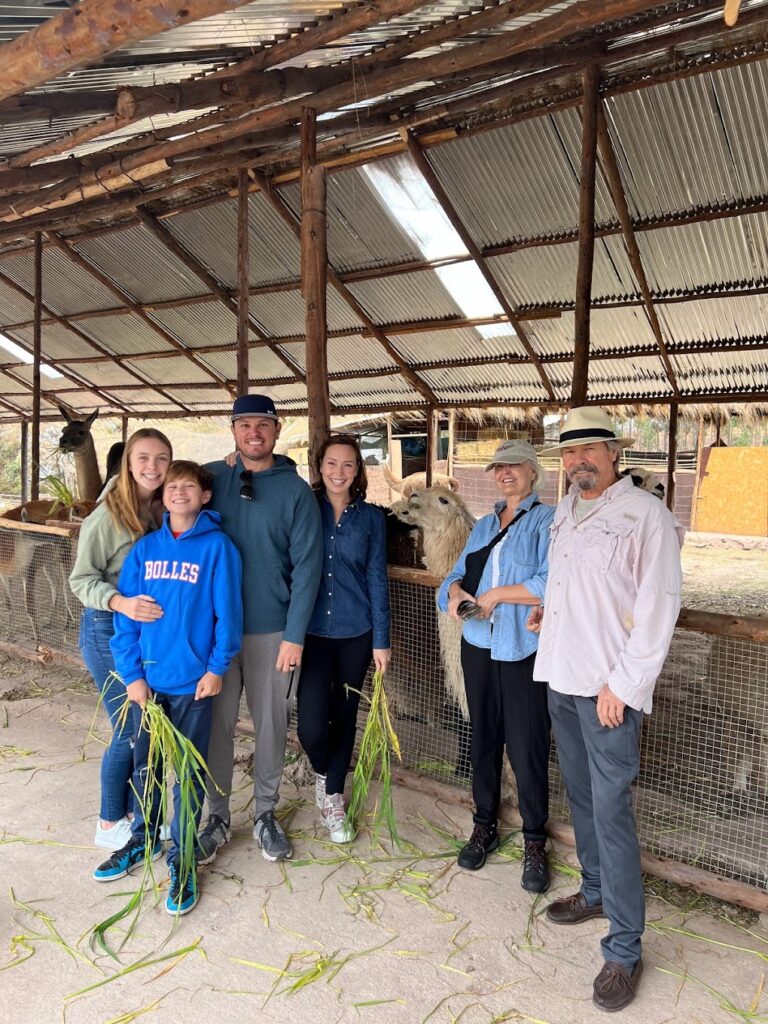
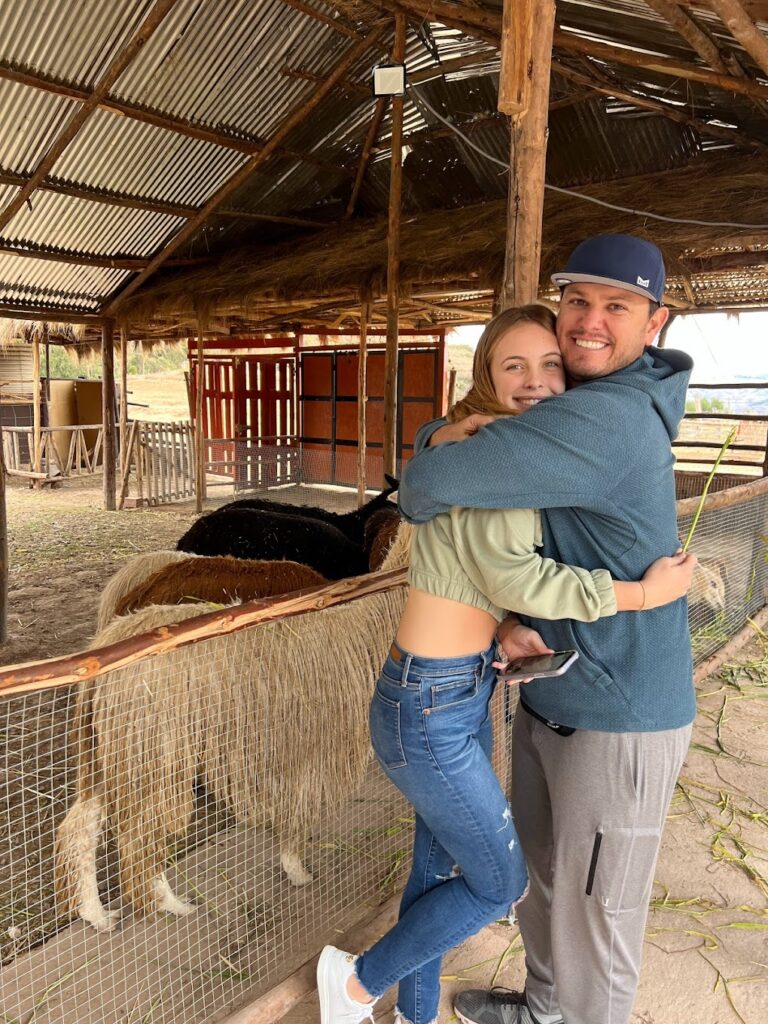
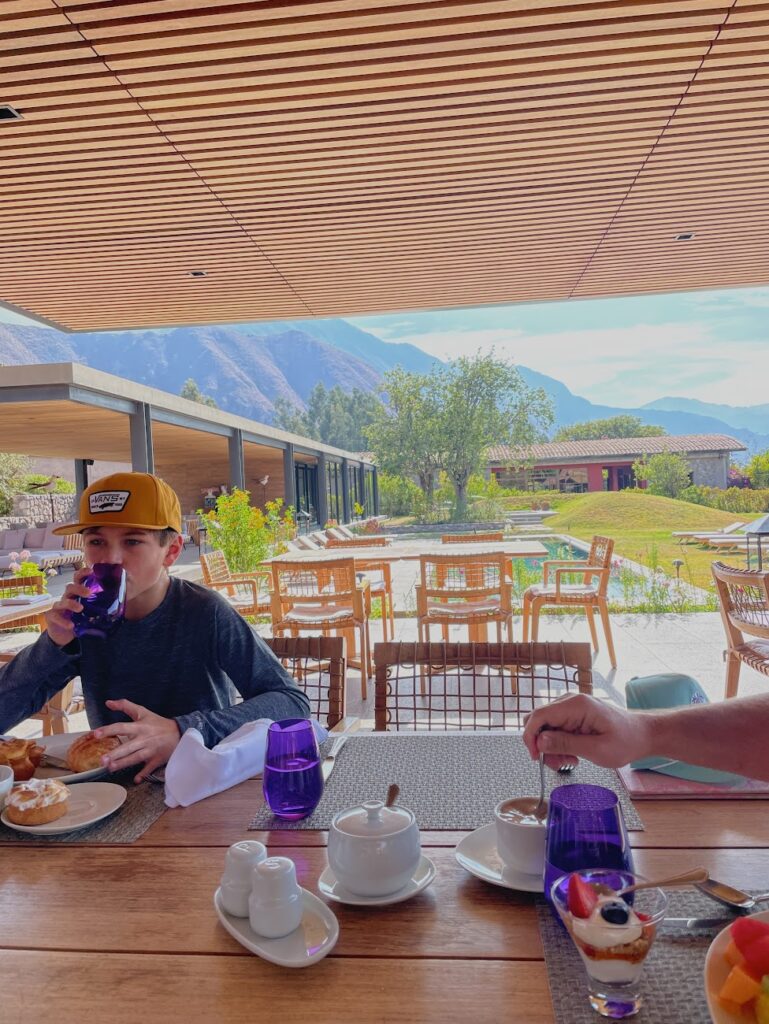
By late afternoon, we arrived at Sol & Luna Lodge Spa, our retreat for the night. Nestled among vibrant gardens with cozy casitas, it felt like stepping into a mountain sanctuary. That evening, beneath a canopy of stars, we bravely tried guinea pig — one of Peru’s most traditional delicacies. A meal we won’t soon forget.
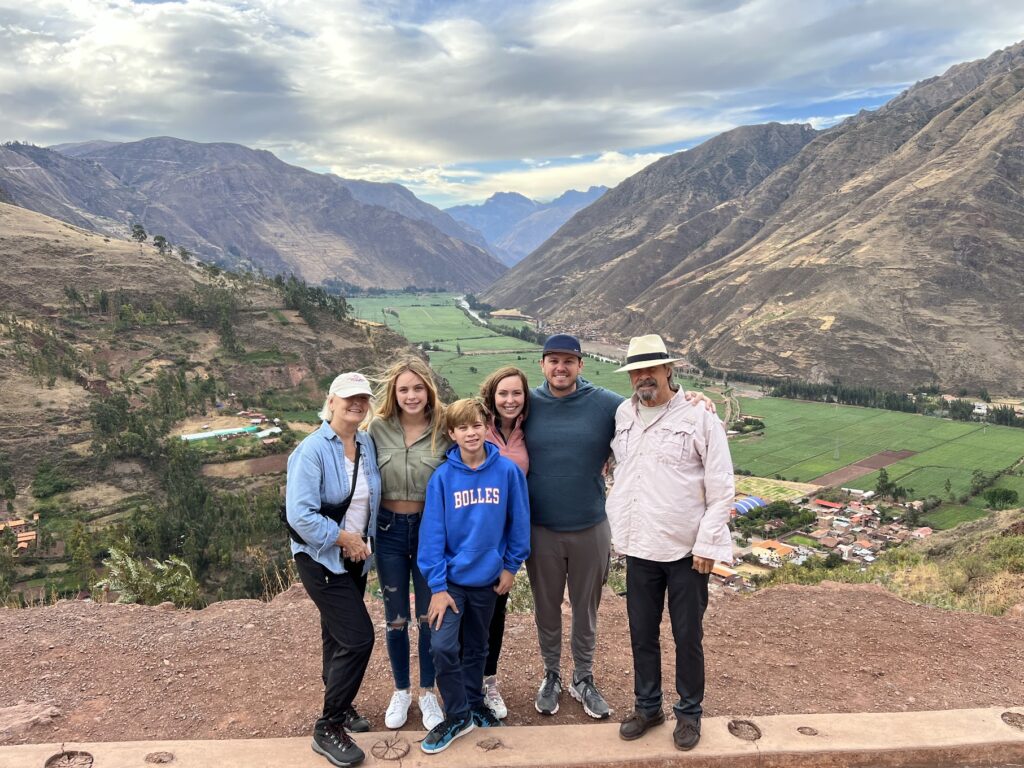
Day 3: Adventure in the Sacred Valley & Train to Machu Picchu
We set off at 8:30 am, ready for a day full of adventure.
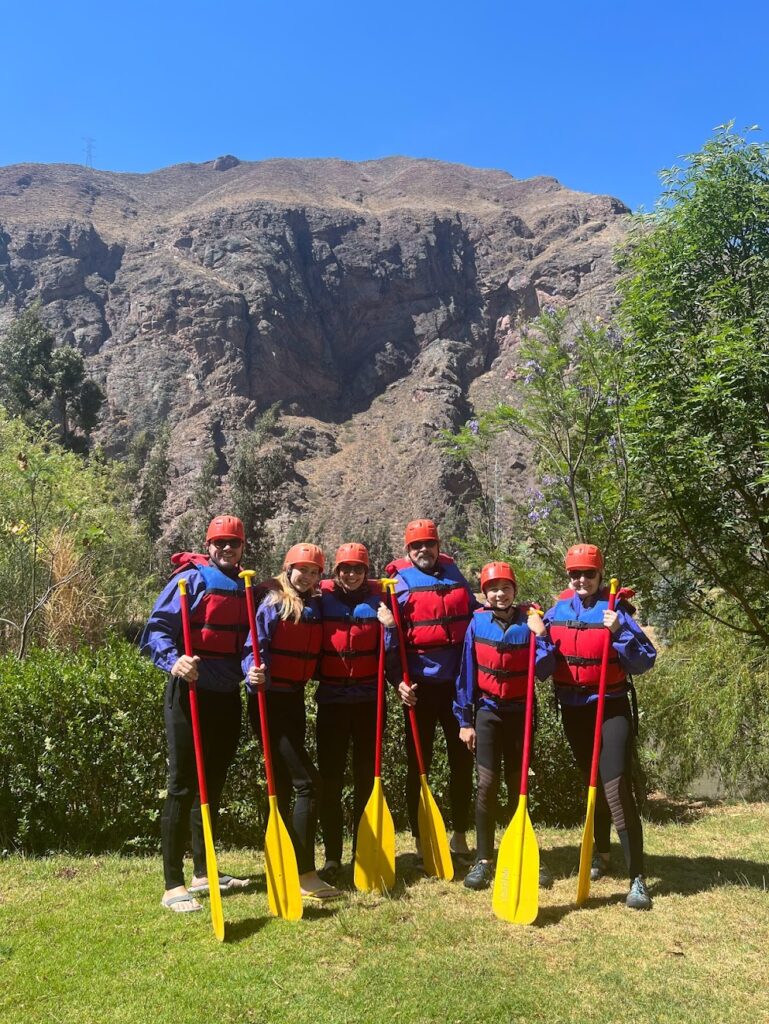
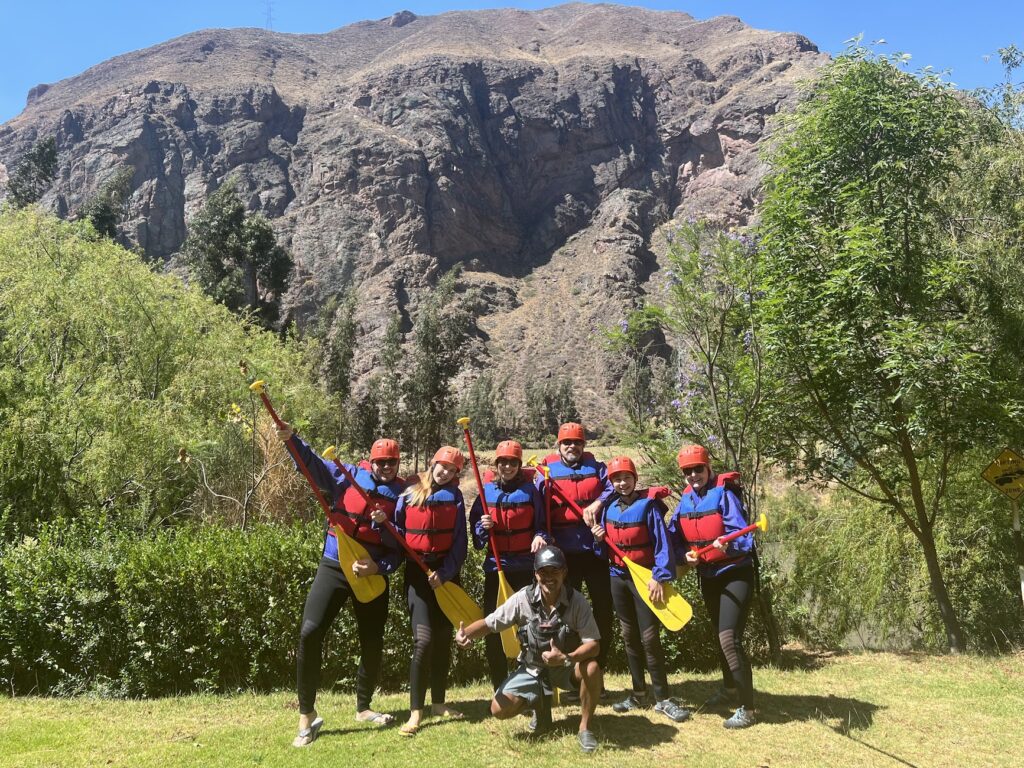
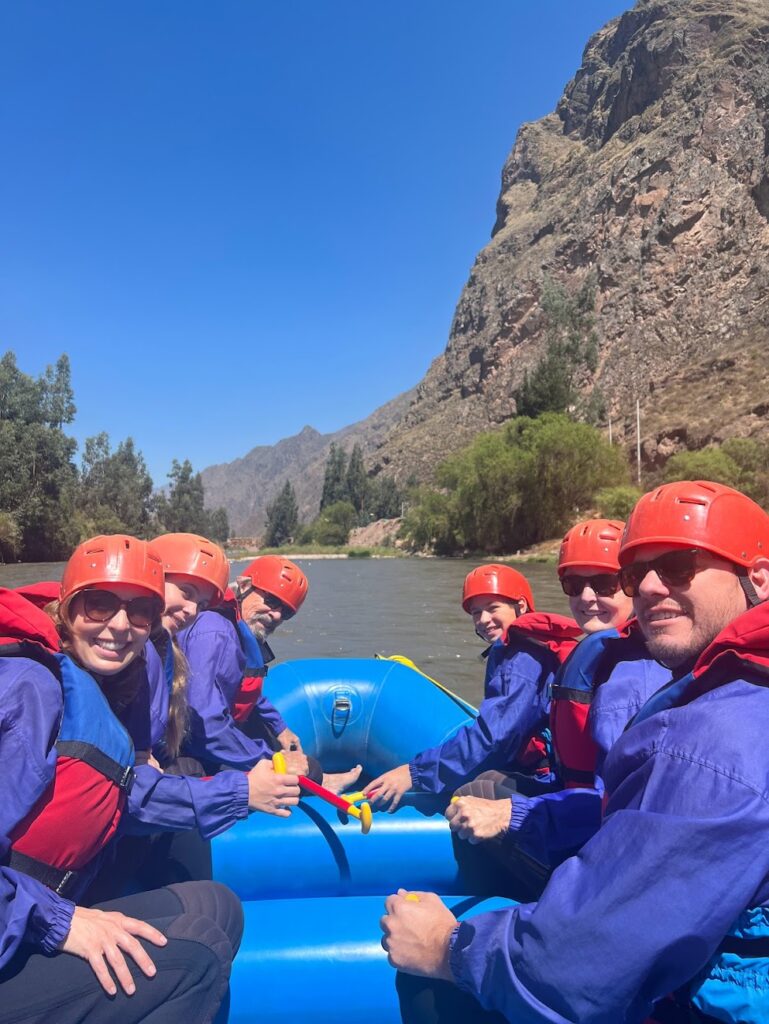
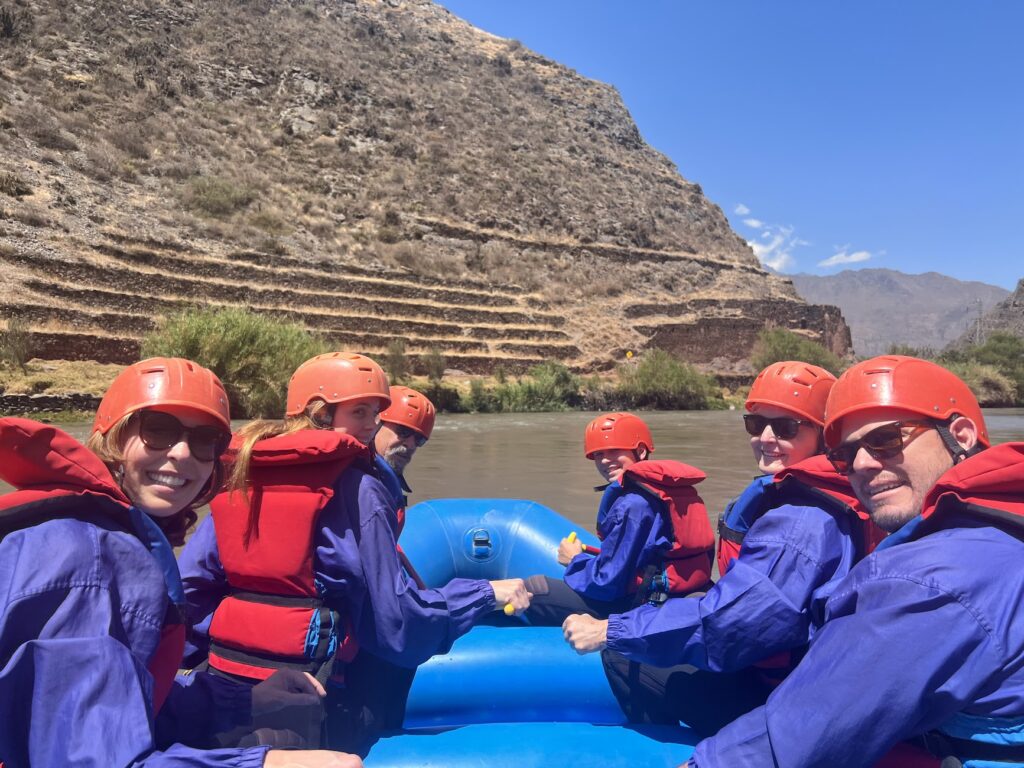
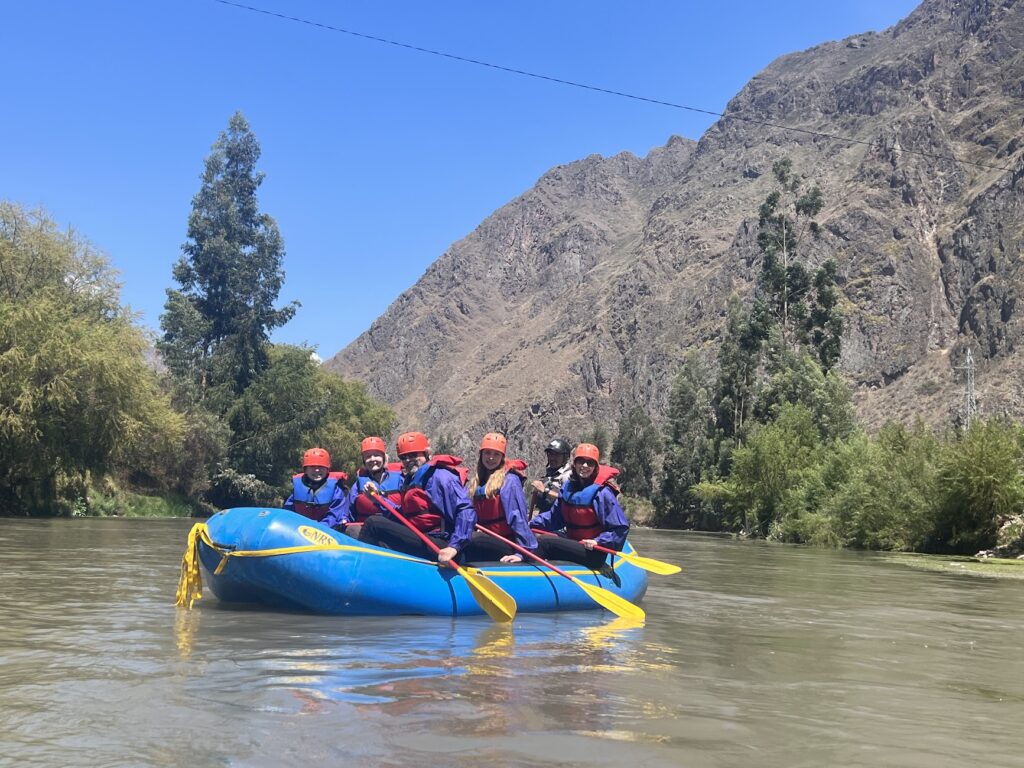
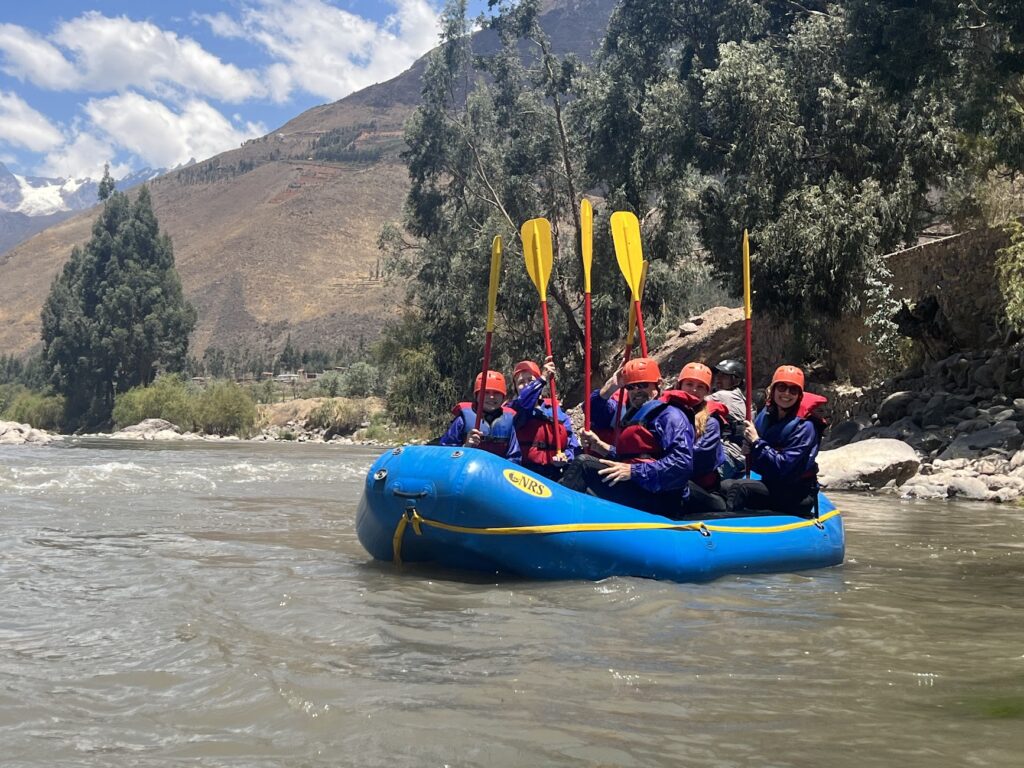
The morning began with rafting on the Urubamba River. After gearing up, we pushed off into the chilly water. The rapids were just enough to thrill without overwhelming us, and the dramatic mountains on either side made the ride feel surreal. Laughter and splashes carried us downstream, surrounded by raw Andean beauty.
Later, our guide Max treated us to a special stop — meeting his family in Ollantaytambo. They welcomed us with such warmth that it quickly became one of the highlights of the trip. Sharing stories, smiles, and daily routines gave us a connection to Peru that no itinerary could have planned.
In the afternoon, Andy and I hopped on bikes for a gentle ride through the valley. We pedaled past fields in Urubamba, Chichubamba, and Yucay, past children playing and farmers tending their land much as their ancestors had done. Ancient Inca terraces rose along the hillsides, still standing strong after centuries. The ride was easy, but the sense of closeness to the land and its people made it unforgettable.
Day 4: Hacienda Huayoccari & Train to Aguas Calientes
That morning, we traded wheels for hooves at Hacienda Huayoccari, a hidden gem tucked into the Sacred Valley. The hacienda, owned by the Lambarri-Orihuela family, is steeped in history and art. We browsed their private collection of Inca and colonial artifacts — ornate Qeros, ancient pottery, and treasures that told Peru’s layered story — all while sipping on a welcome pisco sour.
Soon, we saddled up and rode through Huayllabamba and Urquillos, where farmers worked beneath colonial homes and centuries-old terraces. The rhythm of the horses, the scent of tilled earth, and the crisp mountain air made the morning feel timeless.
We ended the ride back at the hacienda with a decadent four-course meal surrounded by antiques and panoramic mountain views. It felt like a perfect balance of history, culture, and indulgence.
By late afternoon, it was time to board the Vistadome train in Ollantaytambo. The ride itself was a highlight — glass windows framing the rushing Urubamba River, glaciers in the distance, and golden fields glowing in the last light of day.
When we arrived in Aguas Calientes, we were welcomed to the enchanting Inkaterra Machu Picchu Pueblo Hotel. Nestled in the cloud forest, it felt like a secret village with its whitewashed casitas, waterfalls, and winding pathways alive with orchids and hummingbirds. It was love at first sight.
Day 5: Machu Picchu & Huayna Picchu
We checked out of Inkaterra in the morning and made a quick handoff of our bags before heading to the Belmond Sanctuary Lodge, perched right at the gates of Machu Picchu.
Nothing — no photograph or story — could have prepared me for the moment I first gazed out at Machu Picchu. The terraces and stone walls appeared and disappeared through the mist, as if suspended between time and dream.
Walking the ancient paths, I marveled at the precision of Inca engineering: the water systems, astronomical alignments, and mortar-less stonework. Built in the 15th century by Emperor Pachacuti, Machu Picchu’s true purpose remains debated, but its brilliance is undeniable. Abandoned after the Spanish conquest, it remained hidden until Hiram Bingham rediscovered it in 1911. Today, it stands as a UNESCO World Heritage site and a New Seven Wonder of the World.
That afternoon, Andy, my dad, and I began the climb up Huayna Picchu — a steep, pyramid-shaped peak towering above the citadel. Its trail is infamous for its narrow stone steps, nicknamed the “Stairs of Death.” Every step was steep and dizzying, but reaching the summit was worth it all. From above, the citadel seemed impossibly small, cradled by mountains and the looping Urubamba River below. The view left me both exhilarated and humbled.
Afterward, we returned to the Sanctuary Lodge, where the real luxury was simply being so close to the ruins. That evening, over dinner, I felt an overwhelming gratitude to be in such a place — perched on the edge of history itself.
Day 6: A Final Morning at Machu Picchu & Return to Cusco
The morning began with a second visit to Machu Picchu. Despite exploring it the day before, it felt just as magical. The rising sun burned away the mist, revealing temples, plazas, and stairways carved perfectly into the mountain.
We wandered through the Temple of the Sun, the Sacred Plaza, and quiet corners where the stones seemed to hum with ancient energy. Every angle revealed something new, and I felt as though I could spend a lifetime exploring.
By midday, it was time to descend to Aguas Calientes and catch the Vistadome train back through the Sacred Valley. The views — rivers, green peaks, and terraced hillsides — unspooled outside the wide windows like a living postcard.
In Cusco, we checked into Casa Cartagena Boutique Hotel & Spa. With only a handful of suites around a peaceful colonial courtyard, it felt intimate and restorative. After days of exploring, the steam room and jacuzzi were irresistible. That night, wrapped in comfort, I drifted to sleep still carrying the grandeur of Machu Picchu in my mind.
Day 7: Cusco & Chocolate
At 9:00 am, we met our guide for a walking tour of Cusco. The city buzzed with life, a tapestry of Inca foundations and colonial facades.
We began at Koricancha, once the most sacred temple of the Inca Empire. Though its golden walls are long gone, its energy lingers. Standing within, I imagined the rituals once held here to honor the Sun deity.
We continued to the Plaza de Armas, Cusco’s vibrant main square, where the Cathedral stood in all its ornate beauty. The plaza brimmed with people — locals chatting, artisans selling their crafts, children darting between fountains.
The morning ended at the Choco Museum, where Peru’s famed cacao took center stage. We learned the process from bean to bar and even crafted our own chocolate. Rolling up our sleeves, laughing, and tasting along the way, it was the sweetest ending to the tour.
The afternoon was left free to wander at leisure — browsing artisan shops, sipping coffee in hidden plazas, and soaking up Cusco’s atmosphere.
Day 8: Farewell to Cusco & Arrival in Lima
Leaving Cusco was bittersweet. From the plane window, I watched the Andes fade beneath us and the Pacific coastline rise ahead — two vastly different worlds within one country.
In Lima, we checked into the Belmond Miraflores Park, a luxurious retreat perched along the cliffs. The sweeping views of the ocean and the green malecón walkway below were stunning.
That afternoon, we strolled along the coastal promenade, watching waves crash below us and catching our first Pacific sunset. Later, we found a mall nearby, grabbed dinner, and browsed shops for locally made goods. Lima immediately felt different — cosmopolitan, lively, and modern, yet still touched by history.
Day 9: Palomino Islands – Swimming with Sea Lions
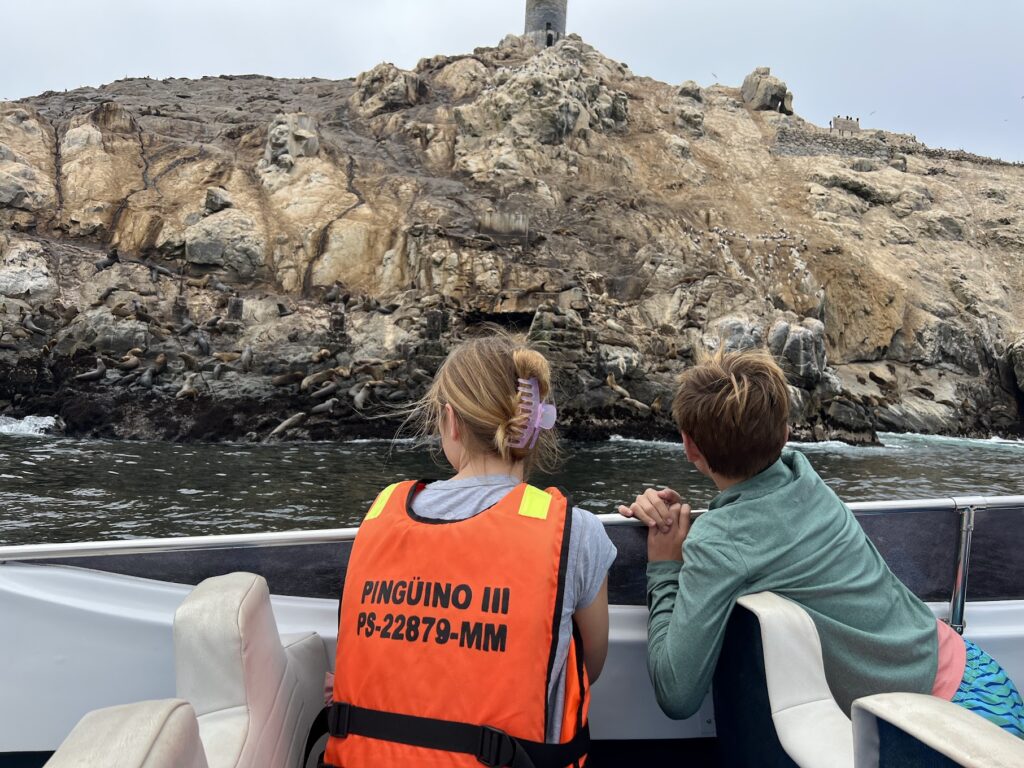
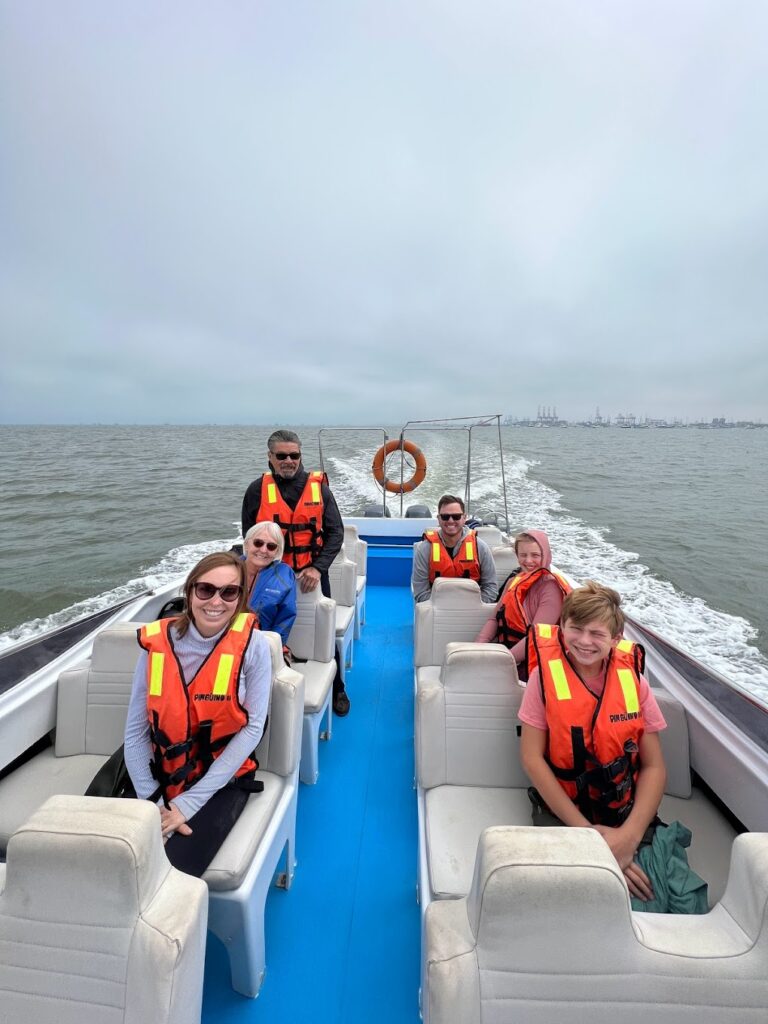
This morning we set out for the Palomino Islands. After transferring to Callao port, we boarded a boat and headed into the Pacific. Along the way, we passed rocky islands brimming with seabirds, fishing boats at work, and even a rookery of Humboldt penguins.
But the highlight was reaching Palomino Island, home to a massive sea lion colony. As we approached, the animals surrounded the boat, diving, leaping, and barking in chorus.
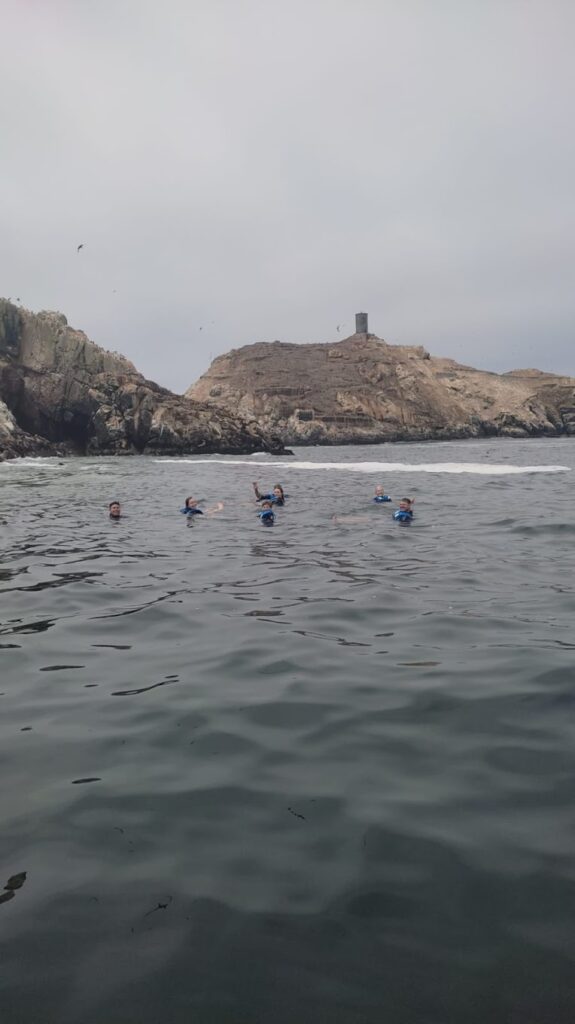
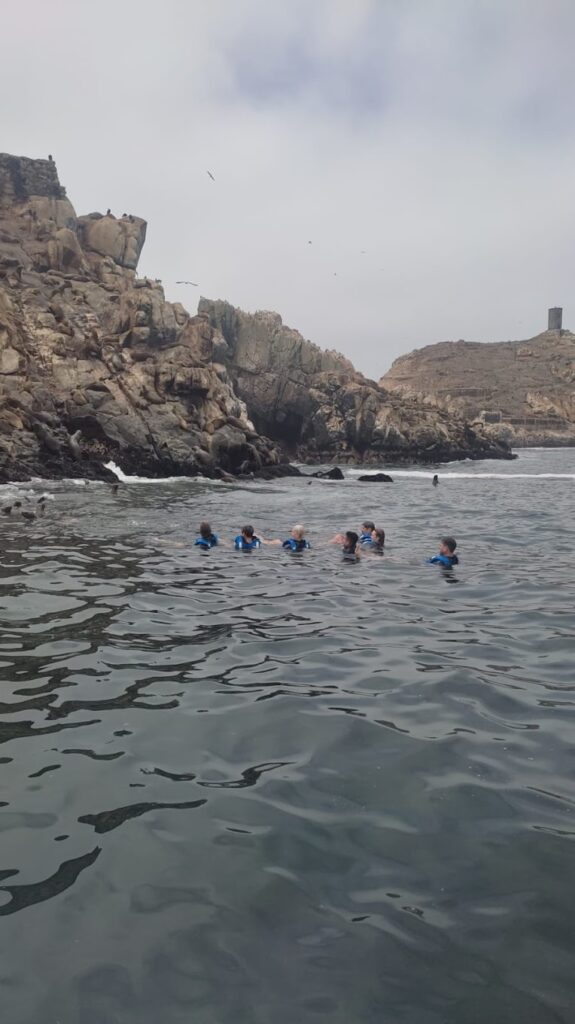
Wearing wetsuits and life vests, we slipped into the cold water to swim among them. The younger sea lions darted close, playful and curious, sometimes brushing against us. The older ones lounged nearby, keeping their distance but watching with interest. Floating among them, I felt a rare sense of wonder — a direct connection with nature at its most wild and free.
On the way back, we passed more bird-filled rookeries before enjoying a snack on calm waters, sharing stories of what felt like a once-in-a-lifetime experience.
Day 10: Lima City & Farewell
Our final day began with a half-day tour of Lima. At the Plaza Mayor, we stood before the Government Palace, City Hall, the Cathedral, and the Archbishop’s Palace, all steeped in centuries of history.
At the San Francisco Monastery, its baroque beauty impressed us, while Casa Aliaga — a private home dating back to 1535 — offered an intimate glimpse into colonial life. Seventeen generations later, the Aliaga family still resides there, and the grand staircase and elegant salons felt like stepping back in time.
We ended at the Larco Herrera Museum, housed in an 18th-century mansion. Its vast collection of pre-Columbian art, from impossibly fine textiles to gold and silverwork, was astounding. Each piece spoke of civilizations that thrived long before Europeans arrived.
That afternoon, back at the Miraflores Park, I took one last walk along the cliffs, the Pacific stretching endlessly below. As the sun dipped low, I reflected on the journey: the Sacred Valley, Machu Picchu, sea lions, chocolate, and countless moments of wonder.
That evening, we headed to the airport for our overnight flight. As Lima’s lights faded beneath us, I carried home memories of mountains and ruins, flavors and laughter, and the gift of time spent with family in a country as rich in spirit as it is in beauty.